Lawn Care in Barking: A Practical, Seasonal Approach to a Healthier Garden
Why lawn care in Barking matters for local homes
![A brightly colored wheelbarrow filled with vibrant red and yellow flowers is placed on a well-maintained grassy garden lawn in Barking. Surrounding the wheelbarrow are gardening tools and accessories including a red watering can, a pair of red rubber boots, and various small pots and plant containers. Behind the wheelbarrow, lush green shrubs and trees with dense foliage provide a natural backdrop, while a cream-colored wooden fence encloses the space, indicating a private garden area. The scene is outdoors with natural daylight, suggesting fair weather. This setting exemplifies typical garden features that a professional landscaper, such as Landscapers Barking, might maintain, focusing on vibrant plant life, outdoor plant containers, and accessible gardening tools in a neat and organized landscaped yard in the Barking area, [postcode].](/pub/_photos/gardening/f1387069440.jpg)
Lawn care in Barking is about more than keeping grass short and tidy. A healthy lawn improves curb appeal, creates a safer space for children and pets, and helps make a garden feel welcoming all year round. In a busy part of East London, where outdoor space is often limited, your lawn becomes an important feature of the home. With the right approach, lawn care in Barking can turn a tired patch of grass into a vibrant, usable part of your property.
Local conditions matter. Barking gardens can face compacted soil, shade from nearby buildings, heavy foot traffic, pollution, and uneven watering patterns. That means lawn care in Barking is not a one-size-fits-all task. The best results come from understanding the grass type, the soil condition, and the seasonal demands of the area. When you match the work to the local environment, the lawn becomes easier to manage and more resilient over time.
Whether you have a small front lawn, a family back garden, or a larger green space, consistent maintenance makes a major difference. Simple actions such as mowing correctly, feeding at the right time, and managing weeds can keep your grass looking fuller and healthier. Good lawn care in Barking is a mixture of routine, observation, and timely action.
Understanding Barking’s lawn conditions

Before starting any lawn care in Barking, it helps to understand the environment your grass is growing in. Urban lawns often experience more stress than suburban lawns because they are exposed to compacted ground, shaded areas, and inconsistent drainage. In many Barking gardens, soil can become dense and low in organic matter, which makes it harder for roots to absorb air, water, and nutrients.
Weather also plays a role. Barking experiences a temperate climate with cooler, wetter months and warmer periods in spring and summer. During dry spells, grass can thin out quickly if it is not watered properly. During wet periods, drainage issues may cause moss to spread or roots to sit in overly damp soil. That is why lawn care in Barking must include both prevention and recovery strategies.
Sunlight exposure is another important factor. Many gardens in Barking are bordered by fences, extensions, or nearby buildings, creating partial shade. Grass grown in shaded conditions needs different mowing, feeding, and watering habits than grass in full sun. Choosing the correct lawn treatment method for each zone of the garden can significantly improve results.
Common challenges in local lawns
- Compacted soil from regular use
- Moss and thatch buildup in damp or shaded areas
- Patchy growth caused by poor drainage
- Weeds spreading through thin grass
- Brown or dry patches during warm weather
Essential lawn care in Barking for every season
Seasonal care is one of the most effective ways to improve lawn care in Barking. Grass changes throughout the year, and your maintenance approach should change with it. A lawn that is well managed in spring will be stronger in summer, recover better in autumn, and survive winter with less damage.
In spring, focus on wake-up tasks: clearing debris, raking out dead grass, checking soil conditions, and applying the first feed if needed. This is also the right time to overseed bare patches. Summer lawn care in Barking should prioritise correct mowing height, steady watering, and avoiding unnecessary stress. In autumn, aeration, feeding, and leaf removal become key. Winter is the time to reduce pressure on the lawn and prevent damage from walking on wet or frozen grass.
Many homeowners find that a seasonal schedule makes lawn care in Barking feel manageable. Rather than reacting to problems after they appear, you are working with the natural cycle of the grass. This usually leads to a greener, thicker, and more durable lawn.
Seasonal priorities at a glance
- Spring: clean, aerate, feed, and overseed
- Summer: mow correctly, water deeply, and control weeds
- Autumn: scarify, aerate, feed, and prepare for winter
- Winter: avoid damage and keep the lawn clear
Mowing techniques that improve lawn health
Mowing is one of the most visible parts of lawn care in Barking, but it is also one of the most misunderstood. Cutting grass too short can weaken the lawn, expose the soil, and encourage weeds and moss. On the other hand, mowing at the right height helps grass grow thicker and stronger. The general rule is to remove only the top third of the blade at any one time.
The ideal mowing height depends on the season and the condition of the lawn. During warmer months, slightly longer grass helps retain moisture and protect roots from heat stress. In shaded areas, taller grass can improve photosynthesis, while on heavily used lawns, moderate height supports durability. Sharp mower blades are essential because blunt blades tear the grass rather than cutting it cleanly, leaving a ragged finish that can lead to disease.
For lawn care in Barking, mowing frequency is just as important as cutting height. Grass often grows faster in spring and early summer, so you may need to mow weekly. In slower periods, such as cold weather or drought, mowing should be reduced. Always keep an eye on the condition of the lawn rather than following a rigid timetable.
Helpful mowing tips
- Mow when the grass is dry for a cleaner cut
- Change direction occasionally to prevent compacted lines
- Leave clippings on the lawn only if they are short and dry
- Avoid mowing during heatwaves or frosty mornings
Feeding, watering, and soil care for stronger grass

Healthy soil is the foundation of effective lawn care in Barking. If the soil lacks nutrients, water, or structure, the grass will struggle no matter how often it is cut. That is why feeding and watering should never be treated as afterthoughts. They are central to creating a lawn that looks good and performs well.
Feeding should usually be timed to match the growth cycle. A spring feed supports strong early growth, while an autumn feed helps build root strength before winter. Choose a product that suits your lawn’s condition, and avoid overfeeding, which can lead to excessive top growth and a weaker root system. If your lawn is already stressed, a balanced treatment is often better than a fast-acting one.
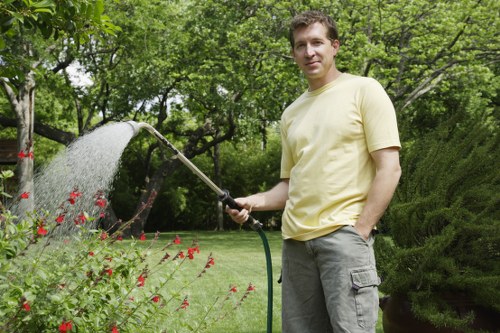
Watering is equally important, especially in drier periods. In Barking, shallow and frequent watering often does more harm than good because it encourages weak roots near the surface. Instead, water less often but more deeply, allowing moisture to reach the lower root zone. This creates a lawn that is better prepared for dry weather and less dependent on constant attention.
Signs your lawn may need extra support
- Grass turning pale or yellow
- Footprints staying visible after walking across it
- Dry patches that spread during warm weather
- Slow recovery after mowing or heavy use
- Thin growth despite regular maintenance
Soil care can also include testing pH and improving structure with topdressing or organic matter. If the soil is too compacted, water and nutrients cannot move freely. In that case, combining feeding with aeration often gives much better results than fertiliser alone. Lawn care in Barking becomes much more effective when the ground beneath the grass is improved, not just the grass itself.
Weed, moss, and patch management in Barking lawns
Weeds are a common frustration for anyone handling lawn care in Barking. They compete with grass for light, nutrients, and space, and they often spread fastest where the lawn is already weak. Common lawn weeds include dandelions, daisies, clover, and plantain. Some are shallow-rooted and easy to remove, while others require a more consistent approach.
Prevention is more effective than cure. A thick, healthy lawn naturally blocks many weeds by reducing open soil areas where seeds can germinate. That is why mowing properly, feeding regularly, and overseeding bare patches are so important. If weeds do appear, they should be dealt with promptly before they spread further.
Moss is another issue often linked to poor drainage, low light, and compacted ground. If your lawn feels soft and spongy in patches, moss may already be taking hold. Rather than just treating the moss itself, look at the underlying cause. Improving drainage, increasing airflow, and reducing shade where possible will do more for long-term lawn care in Barking than repeated surface treatments alone.
Practical patch recovery steps
- Rake away dead material and loose moss
- Aerate the affected area to improve airflow
- Topdress if needed to improve the soil surface
- Apply grass seed suited to the lawn conditions
- Keep the area lightly moist until new growth establishes
Patch repair is especially important in family gardens, where play and regular foot traffic can wear grass down quickly. If you want lawn care in Barking to deliver lasting results, repair thin areas before they become larger bare sections.
Aeration, scarification, and dethatching
Some of the most valuable lawn care in Barking happens below the surface. Aeration and scarification are often overlooked, yet they can make a huge difference to lawn performance. Aeration creates small holes in the soil, helping air, water, and nutrients move into the root zone. This is especially useful in compacted urban gardens where the ground has become hard over time.
Scarification removes thatch, a layer of dead organic material that can build up between the grass and the soil. A thin layer is normal, but too much thatch blocks moisture and creates a barrier that weakens the lawn. It can also encourage moss and disease. Scarifying at the right time of year, usually in spring or autumn, helps reset the lawn and improve growth.
Aeration and scarification should not be rushed. If the lawn is already stressed by drought or frost, those treatments can do more harm than good. Timing is essential. When done correctly, however, they support stronger root development and a cleaner, more even finish.
When to consider these treatments
- The lawn feels hard or compacted underfoot
- Water sits on the surface instead of soaking in
- Moss is becoming a regular problem
- The grass looks thin, tired, or uneven
- Thatch is visible when you pull back the surface
Choosing the right grass care routine for your garden
Not every lawn in Barking needs the same routine. Some gardens are decorative and lightly used, while others serve as play areas or outdoor living spaces. Your lawn care in Barking routine should reflect how the space is used and what condition it is currently in. A light-touch schedule may be enough for a well-established lawn, while a neglected lawn may need a more structured recovery plan.
Think about the main challenges in your garden. Is the lawn shaded for most of the day? Does water drain away quickly, or does it pool after rain? Is the grass mainly used for relaxing, or does it see constant activity? Answering these questions helps you choose the right combination of mowing, feeding, watering, and renovation work.
For busy households, simple maintenance habits can make a big difference. Regular clipping, edge trimming, and seasonal feeding help maintain a neat appearance without requiring constant effort. For lawns that need more support, tasks like topdressing, overseeding, and soil improvement can restore strength over time.
Routine checklist for better results
- Inspect the lawn weekly during the growing season
- Adjust mowing height based on weather and growth
- Remove leaves, branches, and debris promptly
- Check for weeds, moss, or thinning patches
- Plan feeding and aeration around seasonal needs
Eco-friendly lawn care in Barking
More homeowners are choosing eco-friendly lawn care in Barking, and for good reason. Sustainable practices can reduce waste, support biodiversity, and create a healthier garden environment. They can also lower long-term maintenance needs by working with nature rather than against it.
One of the simplest eco-friendly steps is to mow less aggressively and allow the lawn to grow slightly longer in dry weather. This reduces stress on the grass and helps conserve moisture. Another useful practice is mulching clippings when appropriate, which returns nutrients to the soil. Natural fertilisers and organic soil improvers can also support gradual, healthy growth without overloading the lawn.
You can also make your garden more wildlife-friendly by avoiding excessive chemical use and allowing small areas to support pollinators where practical. That does not mean neglecting the lawn; it means managing it in a way that supports both appearance and environmental health. Smart lawn care in Barking can be attractive, practical, and environmentally responsible at the same time.
Eco-friendly habits to consider
- Water early in the day to reduce evaporation
- Use organic matter to improve soil structure
- Keep mower blades sharp to reduce plant stress
- Limit chemical treatments unless truly needed
- Support biodiversity around the lawn edges
When to seek professional lawn care in Barking
While many homeowners can manage basic lawn care in Barking themselves, there are times when professional help is useful. If your lawn has persistent moss, poor drainage, widespread patchiness, or repeated weed problems, a specialist can identify the root cause and recommend the right treatment. Professional support is also helpful if you want to save time or improve results more quickly.
A trained lawn specialist can assess soil condition, recommend appropriate feeds, and carry out treatments such as aeration or scarification with the right tools. They may also be able to advise on lawn renovation, overseeding, and long-term maintenance planning. For larger gardens or heavily used spaces, that expertise can be a real advantage.
Choosing professional lawn care in Barking does not mean giving up control of your garden. It simply means getting support where it matters most. You can still handle everyday mowing and light maintenance while leaving more technical jobs to someone with experience. That balance often produces the best results.
Signs professional support may help
- Repeated moss or weed problems despite routine care
- Large bare or damaged areas
- Poor drainage after rainfall
- Uneven growth across the lawn
- Lack of time to maintain the lawn properly
Building a lawn that stays healthy long term
Long-term success with lawn care in Barking comes from consistency. A lawn rarely transforms overnight, but steady care creates visible improvement over time. The most reliable results come from combining good mowing habits, seasonal feeding, sensible watering, and occasional renovation treatments. When these elements work together, the lawn becomes thicker, greener, and more resilient.
It also helps to think about lawn care as an ongoing investment in your property. A well-kept lawn adds to the overall appearance of the home and makes the outdoor space more usable throughout the year. Whether you prefer a low-maintenance finish or a more polished garden look, the same principles apply: protect the roots, avoid unnecessary stress, and respond early to problems.
Consistency beats intensity. In other words, regular care is better than occasional heavy intervention. That is especially true in urban areas where lawns are more likely to suffer from wear, shade, and compacted soil. By staying attentive, you give the grass the best possible chance to thrive.
Final lawn care checklist
- Mow with care and at the right height
- Feed seasonally, not randomly
- Water deeply when needed
- Control weeds before they spread
- Aerate and scarify when the lawn needs recovery
- Repair thin areas quickly
If you want a greener garden, better curb appeal, and a lawn that can handle everyday use, now is the time to act. Contact us today to improve your lawn care in Barking or book your service now and start building a healthier lawn for the months ahead.

